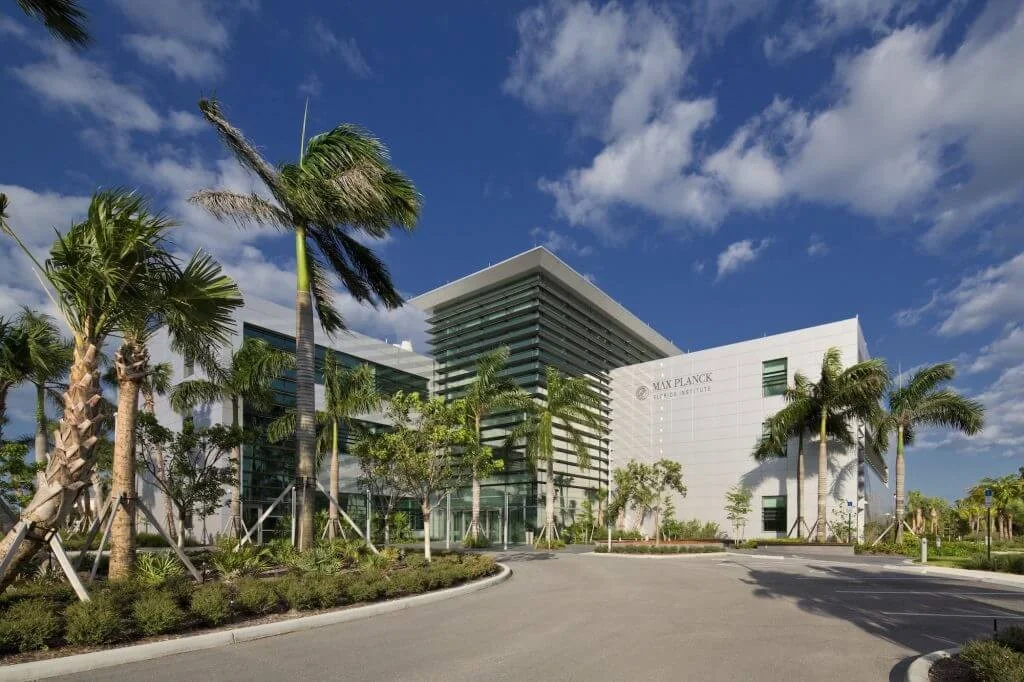
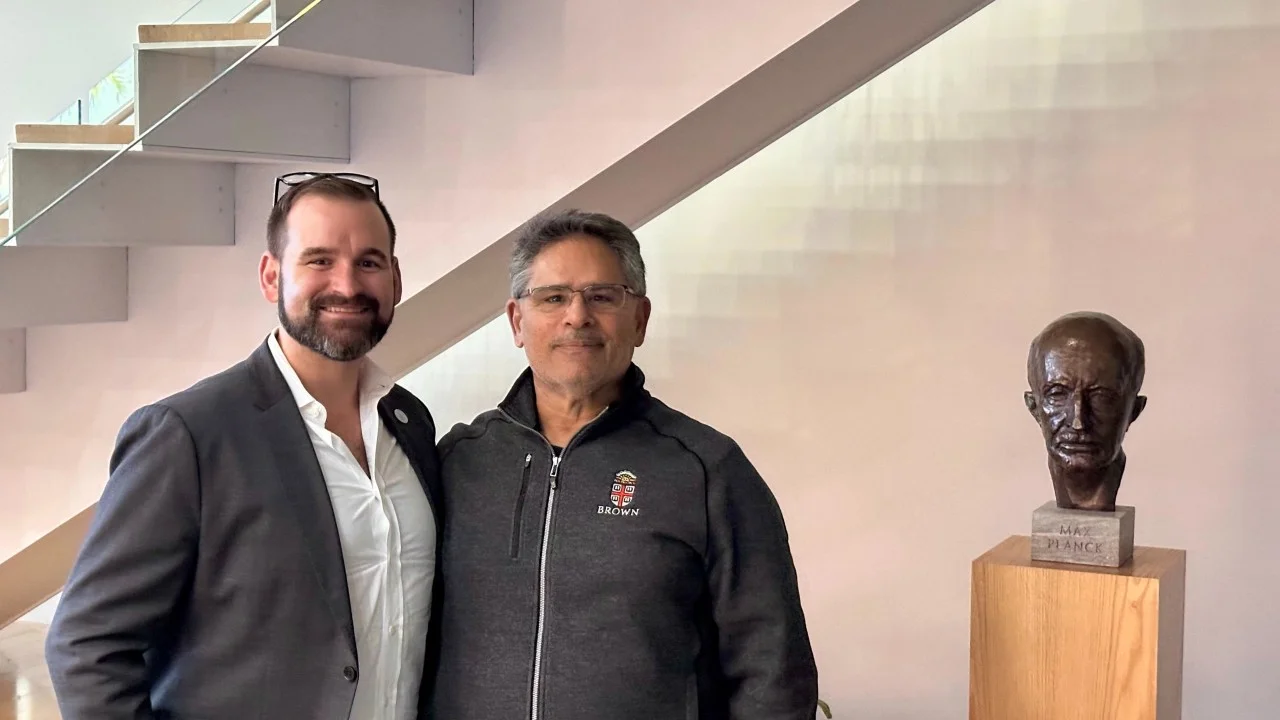
What can we learn when we can finally see the brain in action? Recently, I had the privilege of visiting the Max Planck Florida Institute for Neuroscience, and the experience was nothing short of extraordinary.
MPFI is a world-leading institute focused on understanding the structure, function, and development of neural circuits. What I saw there captures the essence of Avalanche Thinking: when multiple streams of expertise — lasers and optics, physics, photonics, computation, and biology — converge, they trigger cascades of progress that no single discipline could achieve alone.
At Max Planck Florida, the frontier of neuroscience is illuminated not only by brilliant researchers, but by the photons they wield with unprecedented precision. Some of the work I saw left a deep impression — not only because of what is being achieved, but because of what it signals: the avalanche is accelerating, and the future is closer than we think.
Here are just a few examples of the research that stood out:
1. Real-time optical imaging of synaptic communication
Using novel optical reporters, researchers are capturing the moment neurotransmitters activate brain cells— events that occur on millisecond timescales and nanometer spatial scales. These studies are reshaping our understanding of synaptic transmission and plasticity.
2. Multiphoton and adaptive-optics imaging of dendritic spine dynamics
High-speed, deep-tissue imaging enables researchers to observe how dendritic spines grow, retract, and reorganize in response to learning. The ability to track synaptic changes in vivo over minutes, hours, and days provides a direct window into the neural substrate of memory.
3. Two-photon optogenetics coupled with high-sensitivity calcium imaging
By stimulating individual neurons or ensembles while simultaneously reading out their activity, researchers there can now test computational theories of cortical information flow in ways that were never possible.
4. Optical investigations of neural dynamics and plasticity
Leveraging novel molecular tools and advanced imaging technologies, Max Planck Florida Institute teams have helped reveal how synaptic proteins choreograph plasticity across different timescales and neuronal landscapes, and ultimately shape behavioral output.
These discoveries attest to the breakthroughs and the insights revealed have been published in Nature, Science, and Nature Neuroscience.
Each of these breakthroughs depends on the same principle central to Avalanche Thinking: when constraints fall, new landscapes emerge. In this case, optical and laser technologies are lowering the fundamental barriers to observing biology at the speed and scale at which it actually operates.
Of course, these advances would be impossible without the extraordinary tools built by companies that contribute to the backbone of our global photonics ecosystem. They co-create the research landscape. Their innovations propagate outward, enabling applications they could never have predicted — a classic Avalanche effect.
Each of these breakthroughs depends on the same principle central to Avalanche Thinking: when constraints fall, new landscapes emerge.
Avalanche Thinking in Action
What I witnessed at Max Planck Florida is an ideal embodiment of the Avalanche framework:
1. Foundational technologies lower friction.
Ultrafast lasers, adaptive optics, and nanoscale photonics remove barriers to biological discovery.
2. Disciplines lead to innovation plateaus.
Neuroscience, optical physics, materials science, and computation combine into a unified research engine.
3. A cascade of breakthroughs accelerates the field.
Each new optical method unlocks additional biological questions, which in turn drive further improvements in photonics, creating a positive feedback loop.
4. An innovation ecosystem emerges.
Academia, industry, and in certain cases, advanced manufacturing reinforces one another, accelerating discovery and translation.
This is how national and global competitiveness is built, not through a single breakthrough, but through compounded accelerations across interconnected domains.
A Glimpse of What’s Coming
The synergy between advanced photonics and neuroscience is just beginning. With higher-power femtosecond sources, more sensitive detectors, computational imaging, wavefront-corrected microscopes, and AI-accelerated analysis, the state of the art is advancing:
- imaging neural circuits in 3D at the speed of thought
- manipulating specific synapses with light to test causal models
- mapping the nano-architecture of the brain in vivo
- revealing the physical basis of cognition and behavior
One of the most fascinating research areas I learned about was a study on the neural circuits behind stopping locomotion in fruit flies — a subtle behavior, but one with deep implications that showcases the powerful insights gained from thoughtfully applying breakthrough technology to understand how brain circuits drive essential behaviors.
It was recently published in Nature:
Neural circuit mechanisms underlying context-specific halting in Drosophila: https://www.nature.com/articles/s41586-024-07854-7
The Avalanche is gathering momentum.
Importantly, Max Planck Florida is not operating in isolation. Jupiter and Port St. Lucie have become major anchors in Deep Tech and Bio Tech, with institutions like Max Planck Florida, UF-Scripps, Florida Atlantic University, and the Cleveland Clinic Florida Research and Innovation Center, creating a substantial and growing network for research and development.
This regional convergence is enabling not only scientific breakthroughs, but also reinforcing the kind of translational innovation ecosystem that Avalanche Thinking depends on.
I am deeply grateful to the researchers and leadership at the Max Planck Florida Institute for Neuroscience — including Dr. Paul Evans, Dr. Joe Schumacher, Dr. David Fitzpatrick, Dr. Lin Tian, PhD, Dr. Ryohei Yasuda, Dr. Richard Sanchez and Dr. Nino Mancini — for their openness and passion and for welcoming my visit and questions.
They are advancing not only the science of the brain but the entire innovation ecosystem that connects fundamental research to future technologies, industries, and societal benefits.
What makes this possible is the fusion of once-separate disciplines: lasers and optics, neuroscience, and computation.
I left the meeting with great optimism that patience, resourcefulness and commitment to staying with problems longer have paid off for my entire career, which I imparted to everyone I met.