

If you want a case study in leadership, system design, and crisis execution — look no further than January 15, 2009.
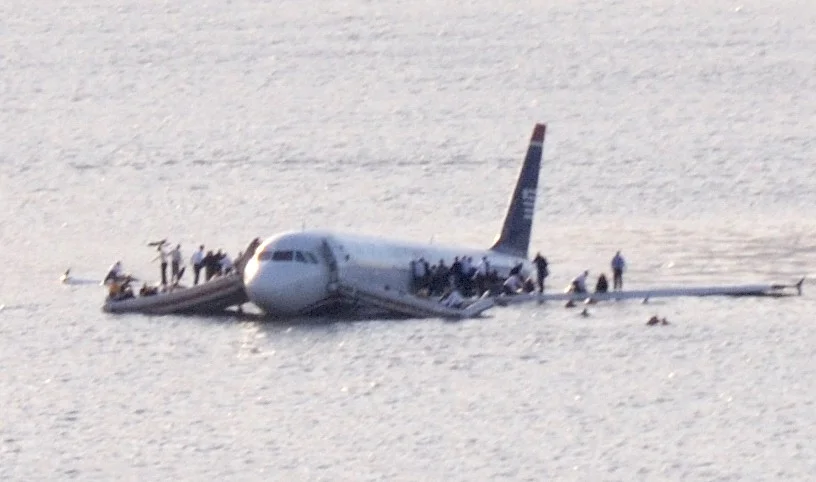
Last month, I found myself reflecting on one of the most instructive moments in modern aviation history: the January 15, 2009 emergency landing of US Airways Flight 1549 on the Hudson River — forever remembered as the Miracle on the Hudson.
But the “miracle” is only the tip of a very large, very human iceberg.
Beneath the headlines was something more enduring — a story of extraordinary collaboration, systems built to withstand high-stakes emergencies, and the quiet professionalism of people who take their responsibilities seriously, every single day.
The Miracle on the Hudson
For those of you who are not familiar with the incident, on January 15, 2009, US Airways flight 1549 departed from LaGuardia Airport in New York bound for Charlotte, North Carolina.
Shortly after takeoff, the plane struck a flock of Canadian geese, causing both engines to fail. After both engines lost thrust, quickly assessed that the aircraft could not return to LaGuardia or reach another airport. Instead, he chose to make an emergency landing in the Hudson River, which runs alongside Manhattan.
By the grace of God, his calm leadership and decision-making triggered an avalanche of search and rescue after the water landing was executed flawlessly. All 155 people on board survived.
What Sully Carried into that Cockpit
Much has been written about Captain Chesley B. Sullenberger III, and rightly so. Sully’s calm, disciplined leadership in the cockpit that day saved lives.
But what continues to resonate with me, even all these years later, is that the “miracle” was actually a result of a dividend of experience and the power of people acting cooperatively.
Sullenberger’s judgment was not improvised; it was earned over decades. It was forged through military training, commercial aviation, thousands of flight hours, simulator repetitions, a deeply embedded safety culture, and a profound respect for and adherence to processes and procedure.
Through the lens of Avalanche Thinking, I would describe this as preparedness compounded over time. When seconds mattered, he did not have to invent a response. He recognized the situation for what it was and acted decisively.
The System Beneath the Surface
Just as important as what happened in the cockpit was the system that had been quietly built over decades — a system that made Sully’s success possible. And much of it was invisible.
Air traffic controllers who instantly adapted. Flight attendants who executed their training flawlessly. Ferry captains who immediately turned their vessels to help without being asked. First responders who arrived within minutes.
Engineers, maintenance crews, aircraft designers, regulators, accident investigators, and safety boards — thousands of people, across decades — who had quietly built a system resilient enough to turn a potential catastrophe into a non-event.
That’s the part we too often miss.
We celebrate the hero — and we should — but the deeper lesson is about systems that work, cultures that prize learning over condemnation, and trained professionals who take their responsibility to the public with profound seriousness and care.
Commercial aviation is among the safest forms of travel not because it is simple, but because it is relentlessly disciplined.
Of course, that does not mean it is without tragedy. Civil aviation has faced heartbreaking failures — incidents that remind us how vital continued vigilance, learning, and accountability remain. Safety is not static and there is always room for improvement.
But what Flight 1549 illustrates is what is possible when training, systems, and shared responsibility do work.
Why Aviation Works Globally
I also feel that it is important to recognize that aviation safety is a result of among the most vital of global cooperations that span geopolitics, borders, airspaces, and time zones.
Pilots trained in one country routinely fly to another, guided by air traffic controllers who speak a shared language of clarity and procedure. Aircrafts are designed, maintained, and operated under strict international standards.
The skies, remarkably, are a place where different nations have figured out how to collaborate with precision and respect.
In a complicated world divided by changing and competing interests, I think civil aviation offers a glimpse of what is possible when mutual safety and shared responsibility are the top priorities.
What We Can Learn
I feel genuine gratitude for everyone who works in aviation and air traffic control — in the cockpit, in the tower, on the tarmac and those behind the scenes. Their commitment has made the skies safe for hundreds of millions of travelers who may never stop thinking about how rare an outcome like Flight 1549 truly is.
The Miracle on the Hudson reminds us of something worth carrying into the year ahead and beyond:
When experience is respected, when cooperation is second nature, and when systems are designed to learn and improve, even moments of extreme stress can be resolved not in tragedy — but in collective and successful outcomes.
And that is something well worth remembering and carrying positively into our interactions with each other, every day.